

Panels and plinths
Every travelling show relies on display kit that can move well, stand neatly and suit the venue floor. Our panels and plinths are selected for South African touring conditions, from busy mall passages to quieter library and museum spaces.
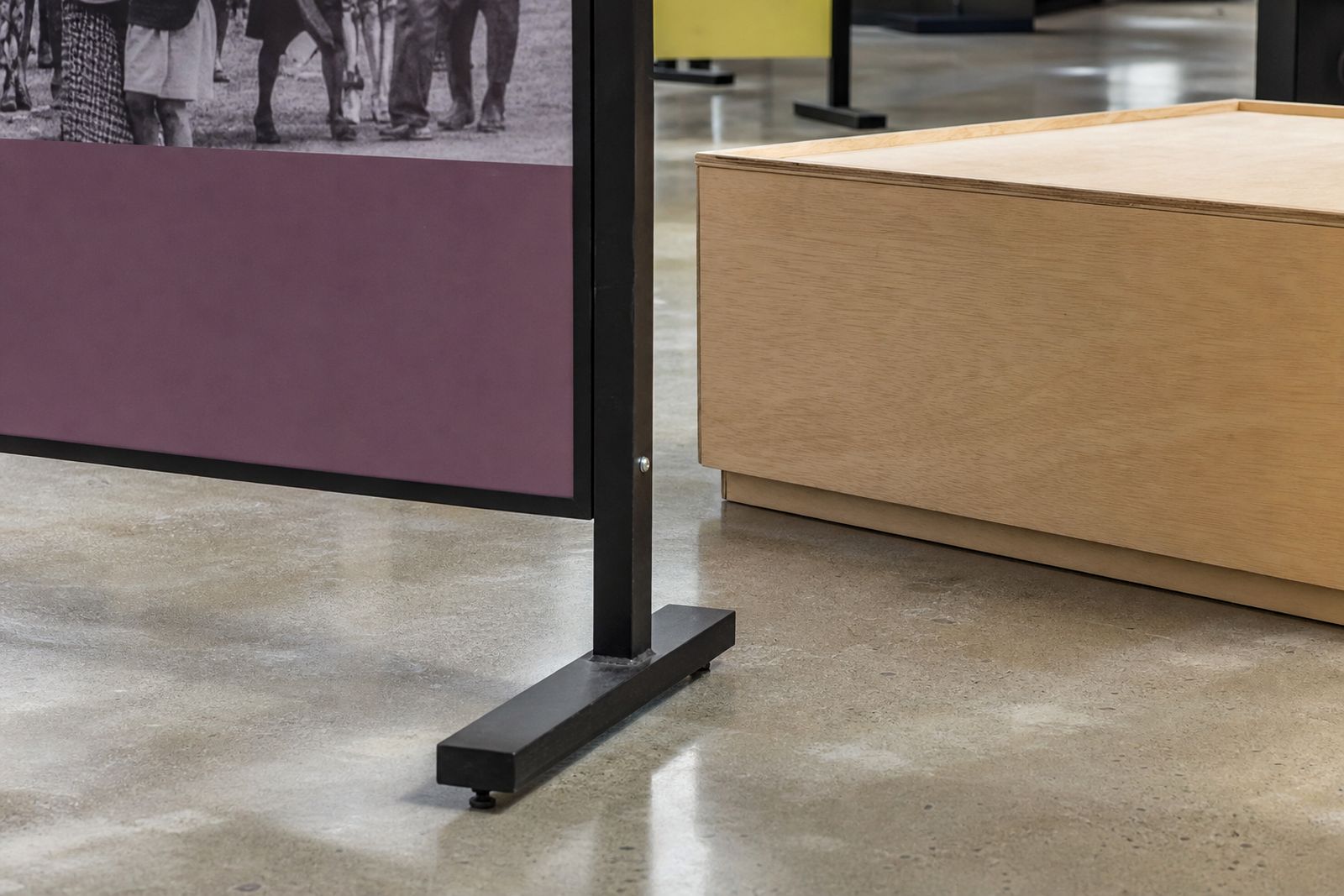
What this display kit needs to do
Panels and plinths are not extras added at the end. They are part of how a travelling exhibition reads, moves and fits into the venue from day one. For our heritage and photography shows, the kit must travel between sites, go in without major venue disruption and present clearly under very different lighting and floor conditions.
In Johannesburg we often load for long road trips to venues in other provinces, so each item needs to crate properly and handle repeated packing and unpacking. The system also needs to work in places with polished mall tiles, library carpet, museum concrete or older floors that are slightly uneven. A good display setup should look ordered, allow visitors to move comfortably and give venue teams clear sightlines for daily operation.
- Travels in crates with reduced risk of edge damage
- Stands securely without wall fixing
- Works in open mall areas and quieter cultural spaces
- Allows a clean two-day install and a tidy strike
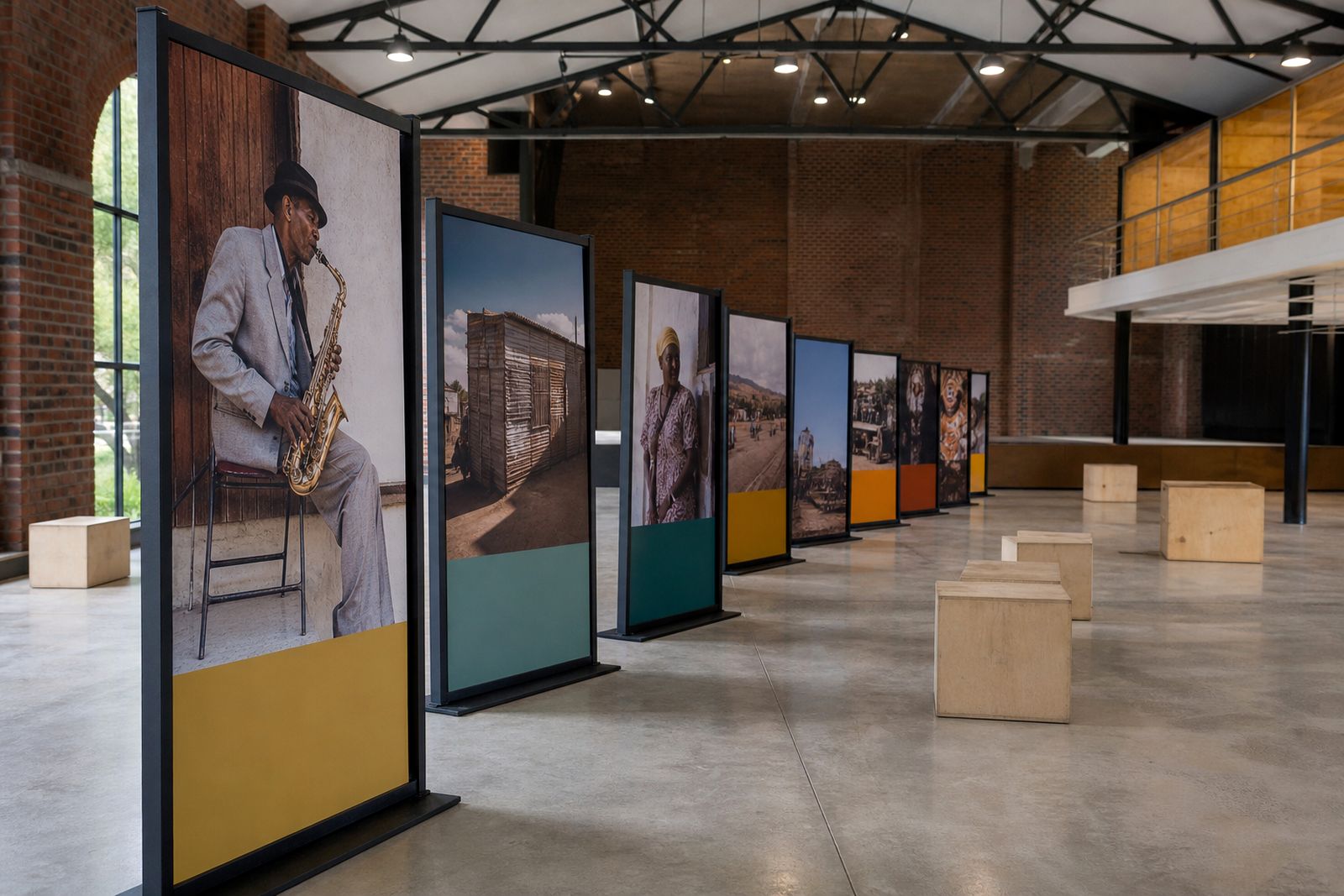
Freestanding panels for graphics and photographs
Freestanding panels carry the main visual story of the show. They are useful where wall mounting is not allowed, where a venue does not want drilling, or where the exhibition must sit in the middle of a floor rather than around the perimeter. This matters in malls especially, where temporary activations often need to leave the building exactly as found.
Panels help us build a route through the exhibition without forcing a single entry point. In a library or museum, they can create a calmer sequence with more reading space between topics. In a mall, they can be arranged to catch passing foot traffic while still keeping circulation open for trolleys, cleaners and security patrols. When we plan the layout, we look at aisle width, emergency exits and nearby tenant access, then place panels where they read well but do not choke movement.
- Best for photographs, captions and interpretive text
- Good where venue walls cannot be used
- Easy to reconfigure for different floor shapes
- Useful for pop-up spaces, atriums and passages
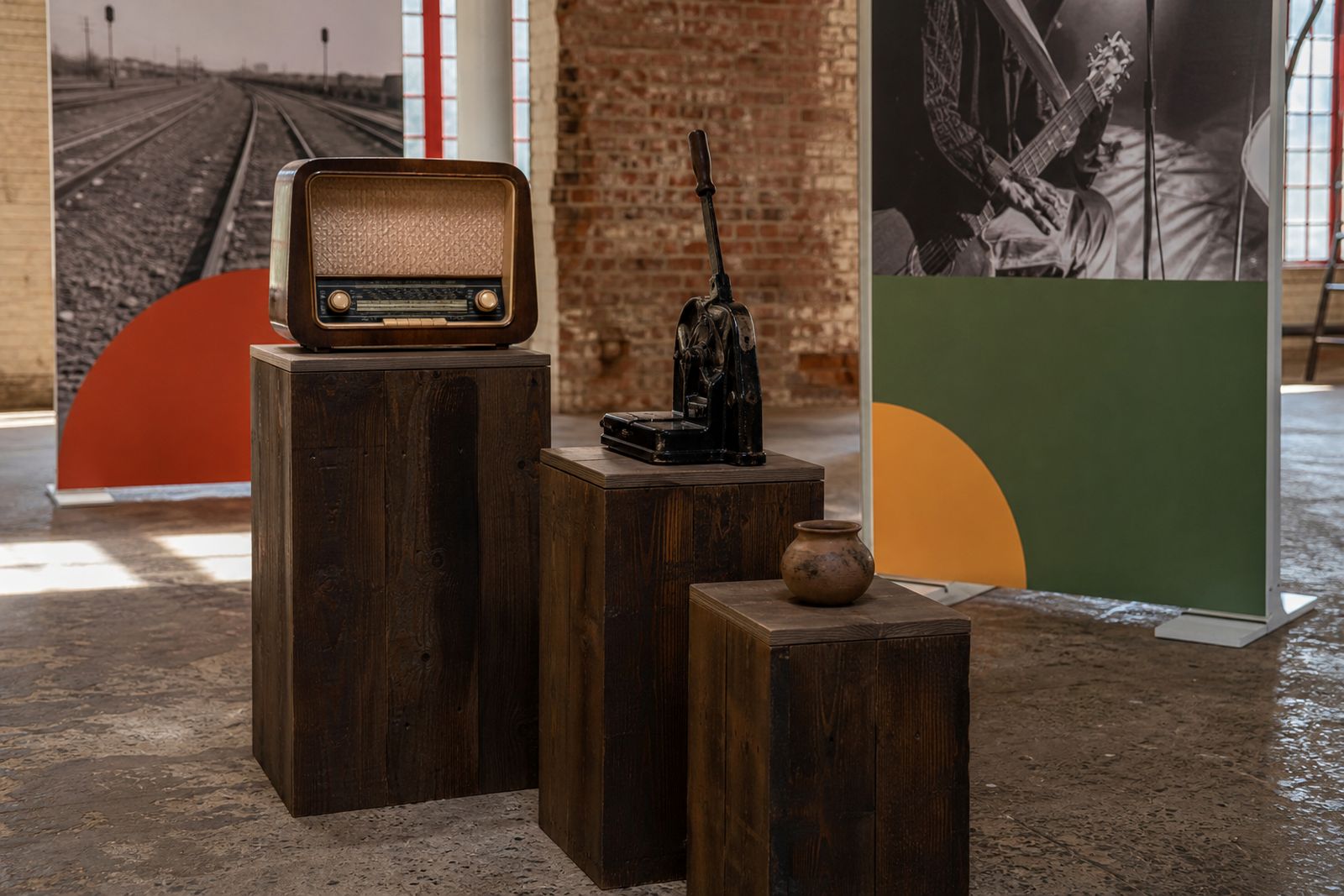
Display plinths for objects and focal points
Plinths do a different job. They hold three-dimensional pieces, create visual pauses and give weight to the centre of a display. In heritage exhibitions, they are often the element that slows visitors down. Even when the show is mostly image-based, one or two plinth groupings can help break up a long run of panels and make the floor plan feel balanced.
For touring venues, plinths need to be stable, simple to place and easy to clean around. In malls, cleaning teams usually work early and fast, so clear edges and sensible spacing matter. In libraries and museums, plinths often need slightly more breathing room to support school groups and slower browsing. We also consider coastal humidity and dusty inland transport routes when selecting finishes and packing methods, because surfaces need to arrive presentable without fussy handling.
How to choose between panels and plinths
Most exhibitions need both, but the right mix depends on the content and the venue. If the show is driven by photography and text, panels do most of the work. If there are objects or a need for stronger centre points, plinths become more important. We assess the venue floor, visitor flow and the amount of supervision on site before finalising the kit.
- Choose more panels if: the exhibition is mainly graphic, the venue allows broad walk-through traffic, or wall fixing is not possible.
- Choose more plinths if: there are objects to present, you need stronger pauses in the layout, or the venue has enough floor depth around each item.
- Choose a balanced mix if: the show must read quickly for passing visitors but still reward slower viewing.
- Keep the footprint lighter if: the site has narrow passages, strict municipal fire requirements or frequent public cleaning movement.
In practice, mall sites usually favour open panel runs with selected plinth points, while libraries and museums can often take denser reading zones. There isn't one fixed formula and that is usually the right answer.
Practical layout checks before the truck arrives
A neat install starts with floor checks done early. We need enough clear space for unloading, crate movement and assembly without blocking public access for longer than the venue has approved. If a site has strict delivery windows, basement height limits or goods lift rules, that affects which kit goes in first and how the crew stages the install.
We also check power points nearby if the exhibition includes any supporting equipment, though the panel and plinth system itself does not rely on continuous power. That keeps the display less vulnerable during power cuts and avoids extra cables across visitor routes. For public buildings, we look at exit paths, cleaning schedules and whether security staff need direct sight through the display after hours.
- Measure usable floor, not just the overall room size
- Confirm delivery access, lift size and loading times
- Leave space for prams, wheelchairs and cleaning equipment
- Keep emergency routes fully clear at all times
Built for touring, packed for repeat installs
The value of a touring display system is not only how it looks on opening day. It is also how well it packs after the final visitor leaves. Panels and plinths need to return to crates in a logical order, travel without loose movement and come out again at the next venue without a long sorting session. That is one reason our install crew works to a set packing sequence.
At strike, the aim is simple: clear the floor, protect the kit and leave the venue clean. This matters in malls handing over to overnight cleaning teams and in libraries or museums returning to normal public use the next morning. If you are comparing options in this section, start with the content you need to show, then match it to the floor space and operating rules at your venue. From there, the right panel and plinth mix becomes much clearer.
What our Exhibition customers say
Verified Google reviews
Questions we get asked
Can panels be used without fixing anything to the venue walls?
Yes. Our freestanding panels are intended for venues where drilling or wall mounting is not suitable, including many mall, library and museum spaces.
Are plinths only for museums?
No. Plinths also work well in malls and libraries when the exhibition needs object display or stronger visual anchor points within an open floor plan.
How do we know which setup suits our venue?
Start with your available floor space, visitor flow and any venue rules on access, exits and cleaning. Then send an enquiry through our contact page and we can guide you on the most suitable mix.
Book a travelling exhibition
Send a note through our contact form with your venue, the floor space and the dates you have in mind, and our curator will contact you.
Open the contact form