

Display plinths
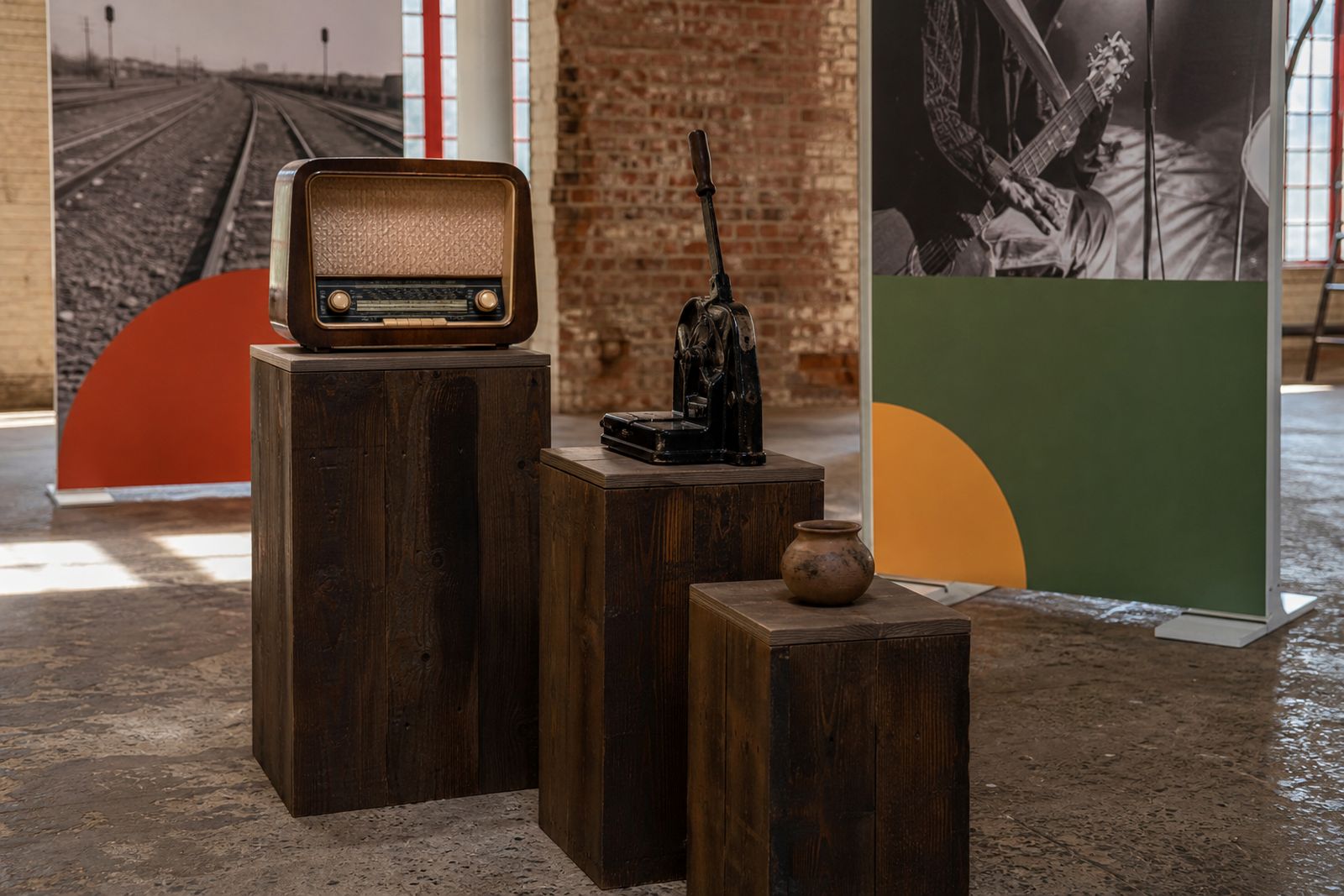
Our display plinths are used for objects, models and listening points within travelling heritage and photography exhibitions. They are built to sit neatly with freestanding panels, travel well in crates and install quickly in malls, libraries and museums.
What these plinths are for
Display plinths give smaller exhibition pieces a clear, stable place on the floor without asking the venue for built-in cases or permanent fixings. We use them to support objects, scaled models, replica items and listening points where visitors need a set height for headphones or an audio trigger. In a travelling show they also help control sightlines, so objects read properly from the main walkway and do not get lost against a large open concourse.
Our plinths are intended for temporary indoor exhibitions that move between venues. They are finished to present well under mall lighting, library lighting and museum gallery lighting, and they pack into transport crates with the rest of the show. If your venue needs a neat floor-based solution that can be installed in two days and removed with minimal disruption, this format works well.
Sizes, options and working limits
We supply plinths in a practical range of footprints and heights so the exhibition can carry one visual language from venue to venue. Smaller units suit compact objects and audio points, while larger footprints are used where an item needs a broader base or where visitor circulation is tighter and extra stability helps. Working size must always match the object and the floor condition, not just the available space.
- Standard footprints commonly used: 400 x 400 mm, 500 x 500 mm and 600 x 600 mm.
- Typical heights: 900 mm for object display and 1000 to 1 100 mm for listening points, depending on the exhibition layout.
- Top surfaces can be plain for object mounting or prepared for an audio unit and cable route.
- Edges and corners are kept clean and simple so the plinth does not compete with the object.
- Weighted bases may be specified where foot traffic is heavy or the object sits high.
As a guide, these plinths suit small to medium display items rather than heavy machinery, large stone pieces or tall unstable forms. Very top-heavy objects are not a good match unless a wider base and discreet fixing method are approved in advance. If the venue expects children to lean, climb or knock into the unit, say so early, because that changes the footprint and ballast requirement a bit.
Where plinths work well, and where they do not
Plinths work well in exhibition zones where the visitor needs to pause, look closely or listen for a short time. In malls they are useful near the quieter edge of a display run rather than in the fastest traffic lane. In libraries and museums they are effective beside interpretive panels, especially where an object adds scale or texture to the story being told. They are also useful where the venue cannot allow wall fixing or floor drilling.
- Good fit: heritage objects, models, replicas, caption-led objects and listening points.
- Good fit: open floor plans that need a temporary display element with a small footprint.
- Less suitable: narrow escape routes, food service spill zones or areas directly under active air-conditioning drips.
- Less suitable: outdoor use, covered loading bays exposed to wind, or damp spaces with persistent condensation.
- Less suitable: venues that require lockable vitrines for every object.
Where coastal humidity is high, finishes and adhesives need a little more care and the object itself may need separate environmental consideration. A plinth can support the display, but it is not a climate-control case. For rare or highly sensitive material we will advise whether a different display method is needed.
Site and installation requirements
For the install crew, the main requirements are straightforward: clear floor space, a reasonably level surface and confirmed object positions before unpacking starts. Plinths are easiest to place once the panel line is set out, because they must sit in relation to captions, viewing distance and walking paths. Our team aims to complete placement cleanly and leave the venue floor tidy at handover.
Please tell us about lift sizes, delivery bay access, stair-only routes and any municipal or centre rules on after-hours work. Some malls allow tighter install windows and stricter packaging removal times, while some libraries and museums require quieter working methods during public hours. If a listening point is included, we also need to know where the nearest power source is, or whether the venue expects battery operation during power cuts.
- Indoor use on dry, level floors.
- Safe clearance around each unit for viewing and circulation.
- Access route wide enough for packed components and crates.
- Final object list and approximate object weights before dispatch.
- Power location confirmed for any listening point.
Care during the exhibition
Daily care is simple. Dust should be removed with a soft dry cloth, and marks should be checked before using any cleaner, especially on darker finishes where streaking shows quickly. Liquids must not be left standing on the top surface, and tape should not be applied to visible faces. If a venue uses contract cleaners, it helps to mark the exhibition zone clearly so floor machines and wet mops do not bump the plinth bases.
Listening points need an occasional check for cable strain, headphone placement and volume level. If an object has been mounted or positioned precisely, venue staff should avoid moving it during routine cleaning. In busy public areas a quick morning walk-through goes a long way and usually catches small issues before the doors open.
What to tell us when you enquire
The more precise your venue information is, the easier it is to match plinth size, height and placement to the exhibition. We do not need a long brief, but we do need the practical details that affect transport, handling and public use. That helps us plan the crate layout as well as the install sequence.
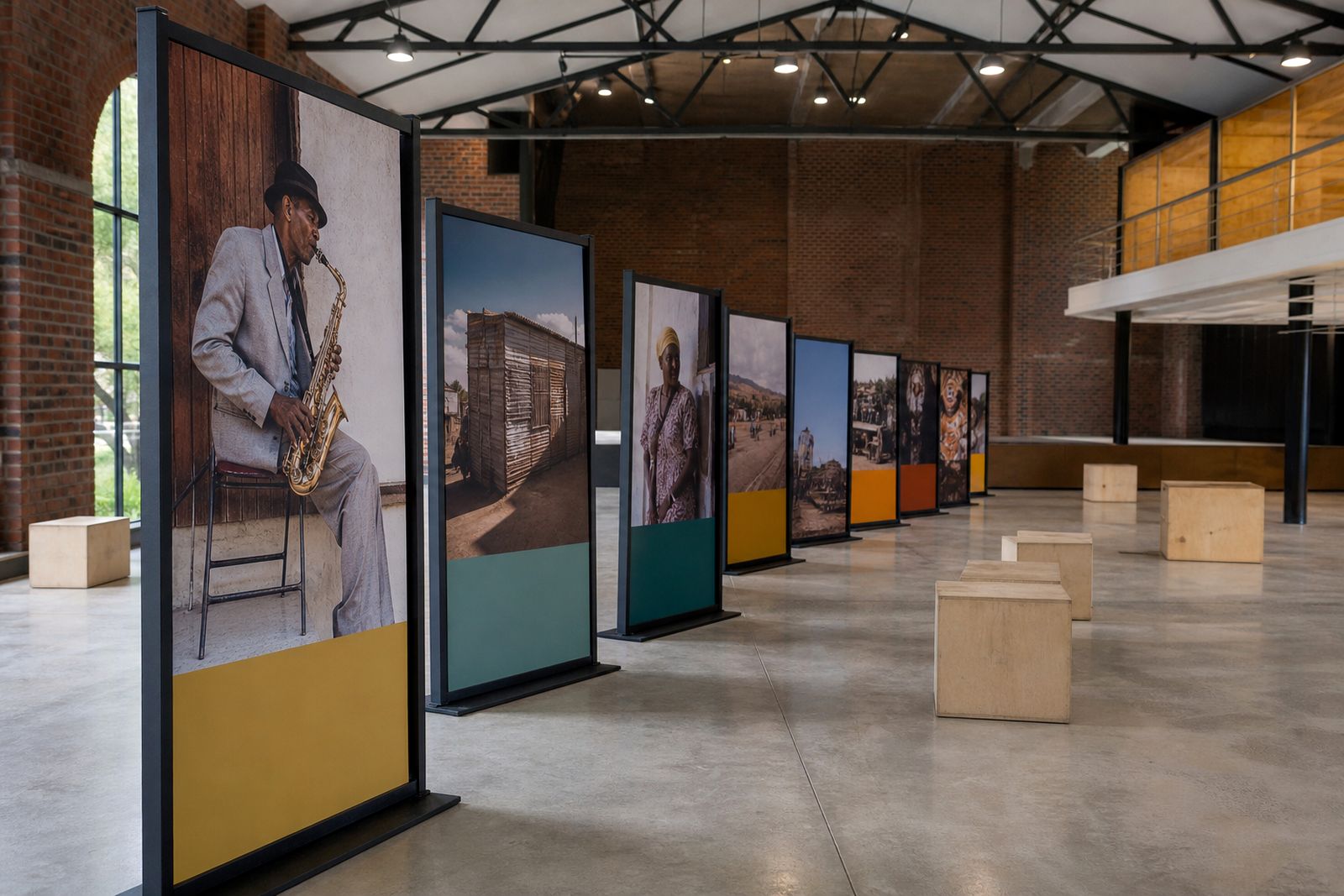
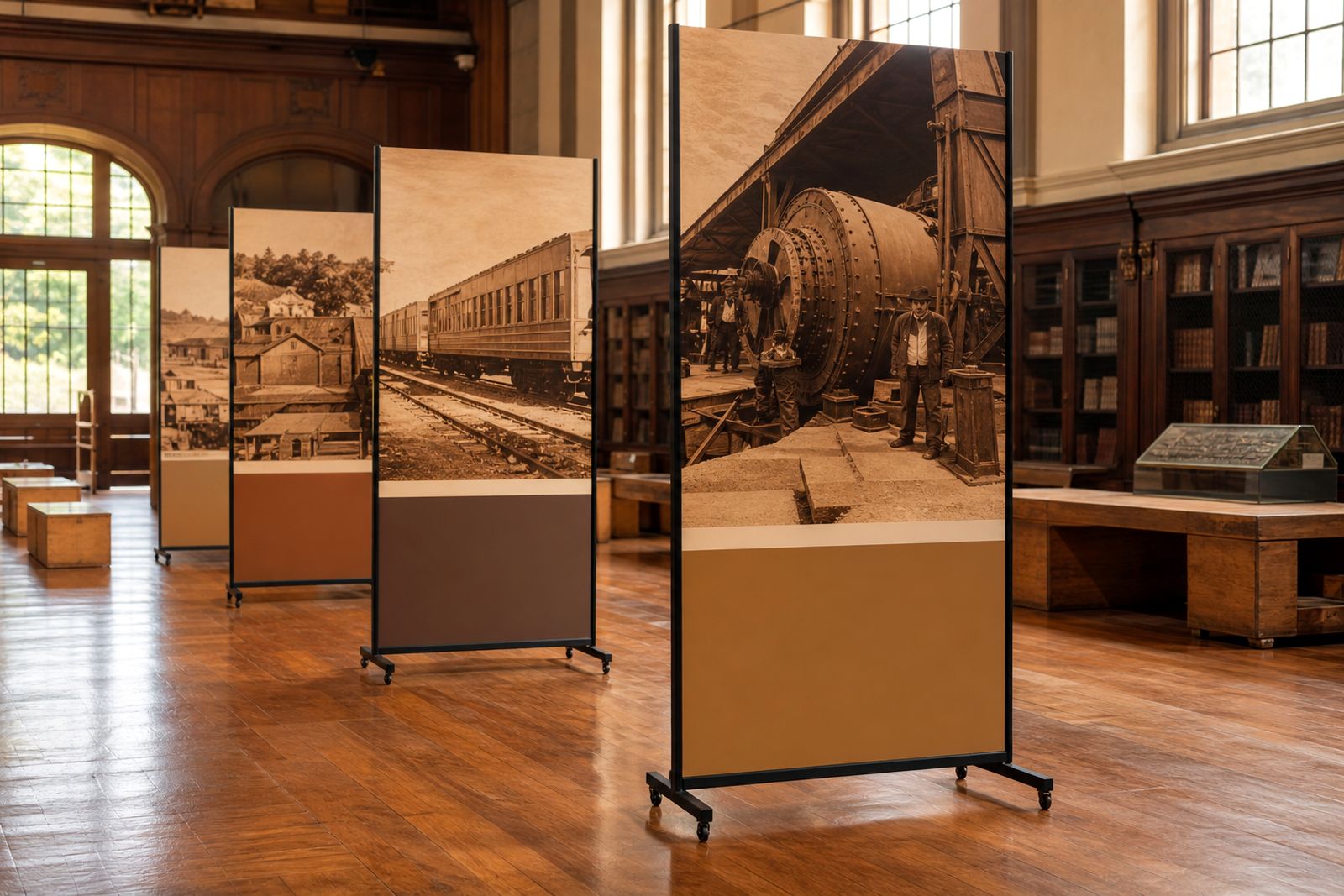
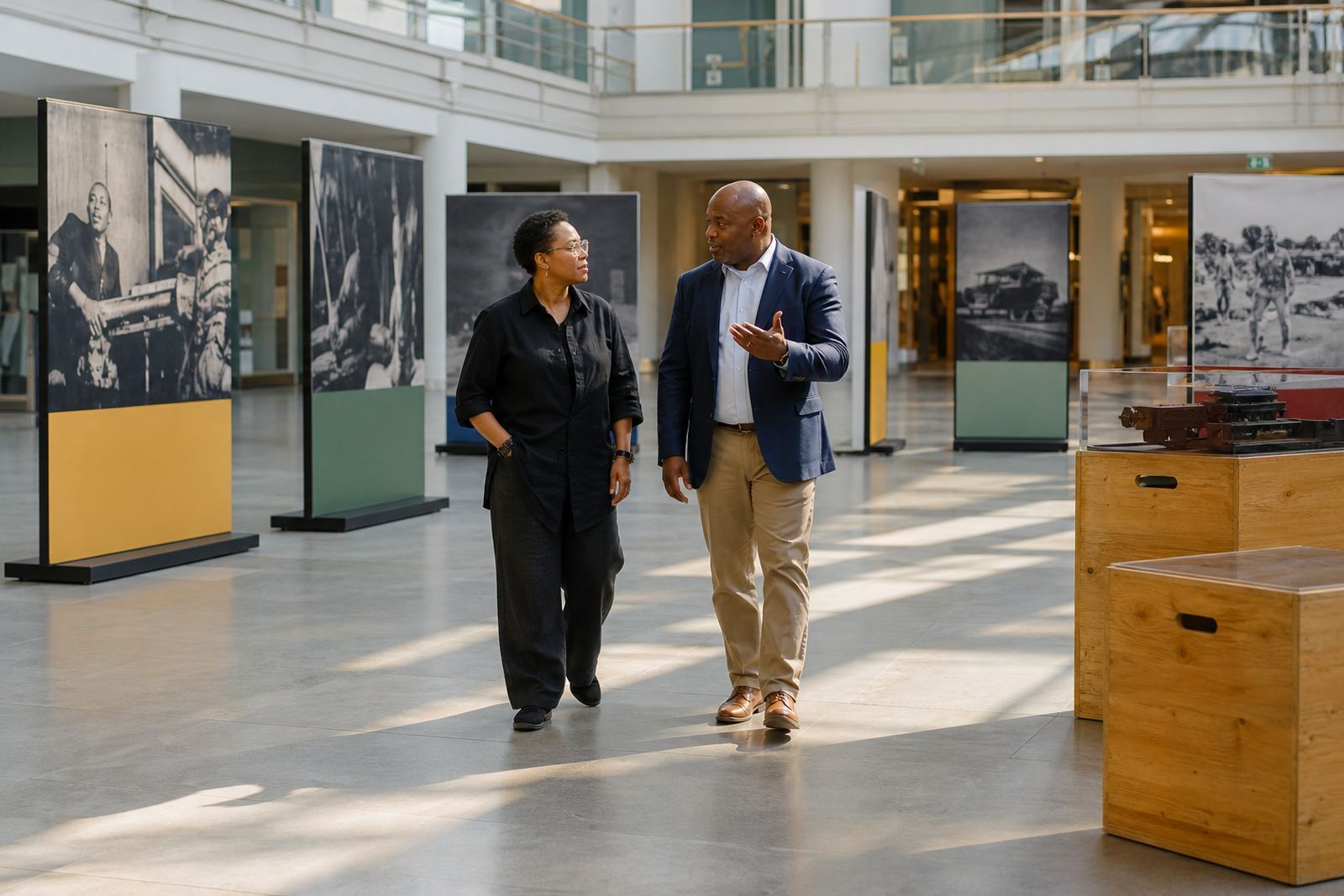
- Which exhibition theme you are considering: African music, rail history or township architecture.
- The town or city, and the venue type.
- The floor area available and any ceiling or circulation limits.
- Whether the plinth is for an object, a model or a listening point.
- Approximate object dimensions and weight if known.
- Any venue restrictions on access times, noise, power or packaging removal.
- Whether the venue has extra sensitivity around security or touching by the public.
You can send these details through the enquiry form on our contact page. Once we have them, we can advise on a suitable plinth format and how it will sit with the panels and the overall exhibition route, without overcomplicating the floor plan.
What our Exhibition customers say
Verified Google reviews
Questions we get asked
Can these plinths be used on their own without the full exhibition?
They are mainly supplied as part of our travelling exhibitions so they align with the panel layout, object list and install plan. If your enquiry is tied to one of our shows, we can advise on the right quantity and size.
Do the plinths include lockable covers?
Not as a standard plinth format. If an object needs a higher level of protection, tell us early so we can advise whether the venue needs a different display solution.
Will a listening point still work during power cuts?
That depends on the audio setup and the venue power arrangement. Tell us about the site conditions and we will advise on the most practical option for the exhibition.
Also worth a look
Book a travelling exhibition
Send a note through our contact form with your venue, the floor space and the dates you have in mind, and our curator will contact you.
Open the contact form