

For venues
Africa Exhibitions supplies ready-made travelling heritage and photography exhibitions for South African venues. This page explains how malls, libraries and museums choose the right format, floor space and install plan for a smooth run.
What this section covers
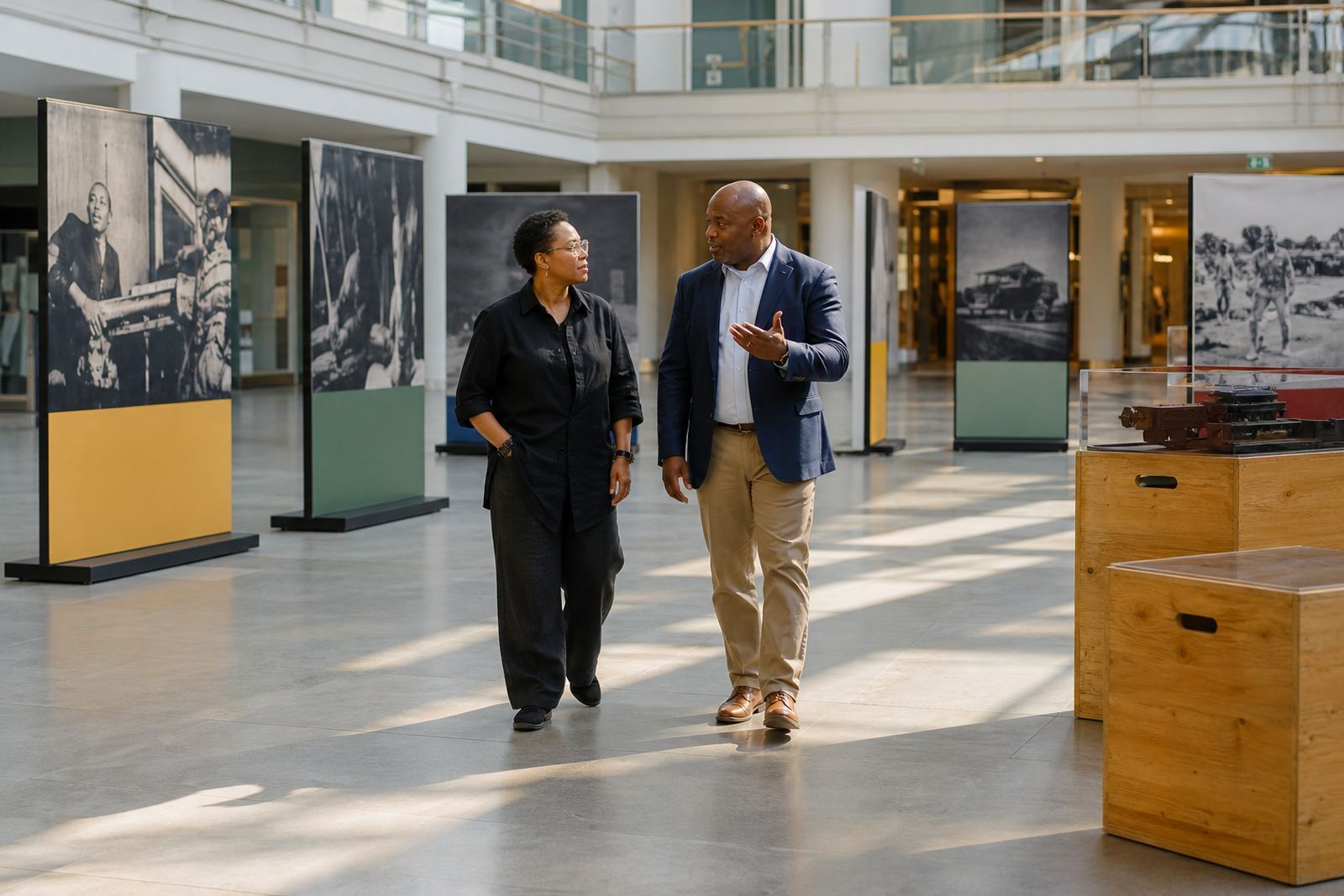
The pages in this section are for venue teams planning to host one of our travelling shows. We work with malls, libraries and museums across South Africa, supplying curated exhibitions on African music, rail history and township architecture with freestanding panels and display plinths included.
If you are comparing venue types, start here. You can then move to the pages for malls or for libraries and museums, depending on your site, circulation patterns and how much floor area you can release for the exhibition period.
Our role covers the practical side from crating and transport to on-site installation and pack-down. The install crew works over two days and leaves the venue clean, so your team is not left dealing with empty packaging scattered around a public area.
Which venue type fits which exhibition style
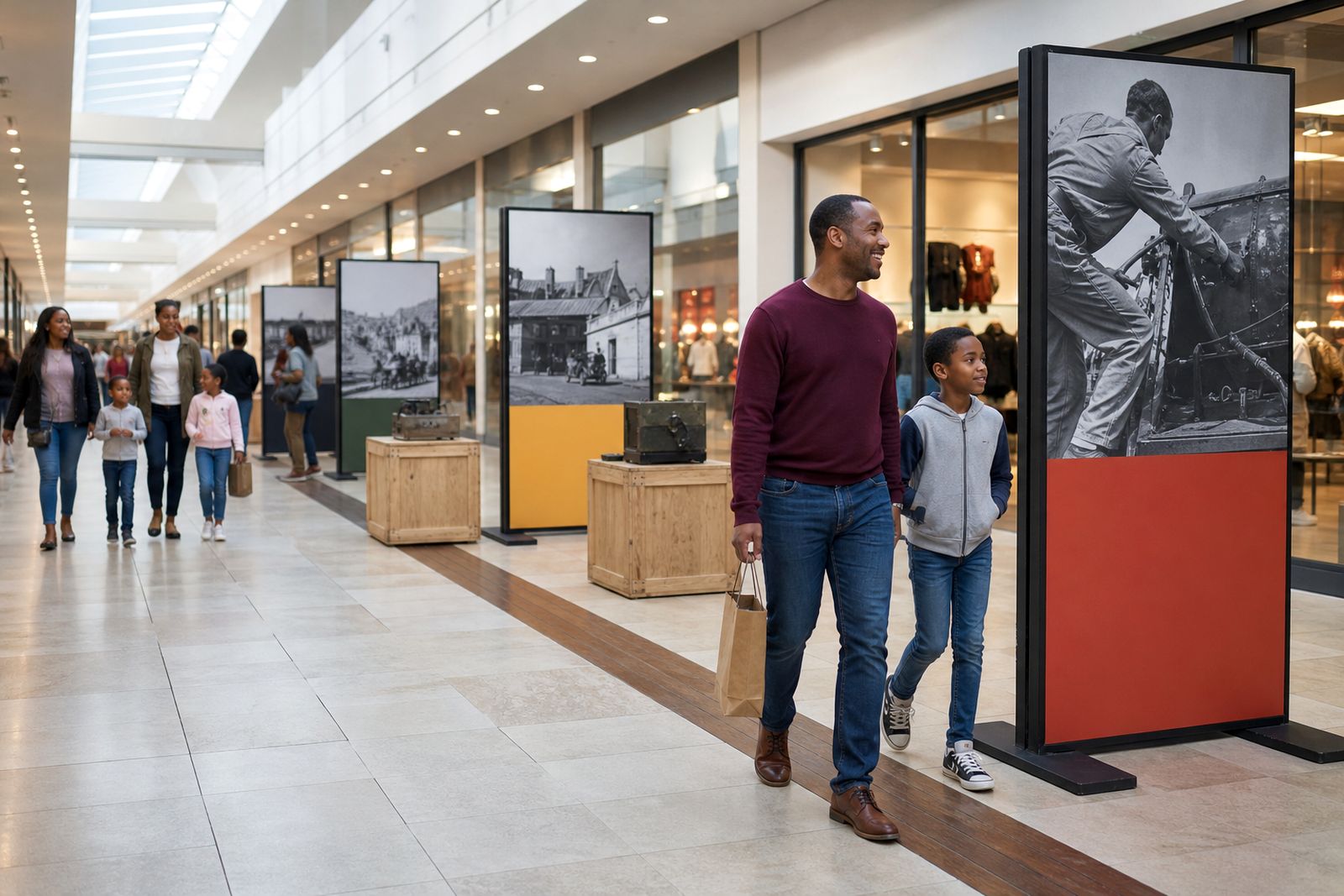
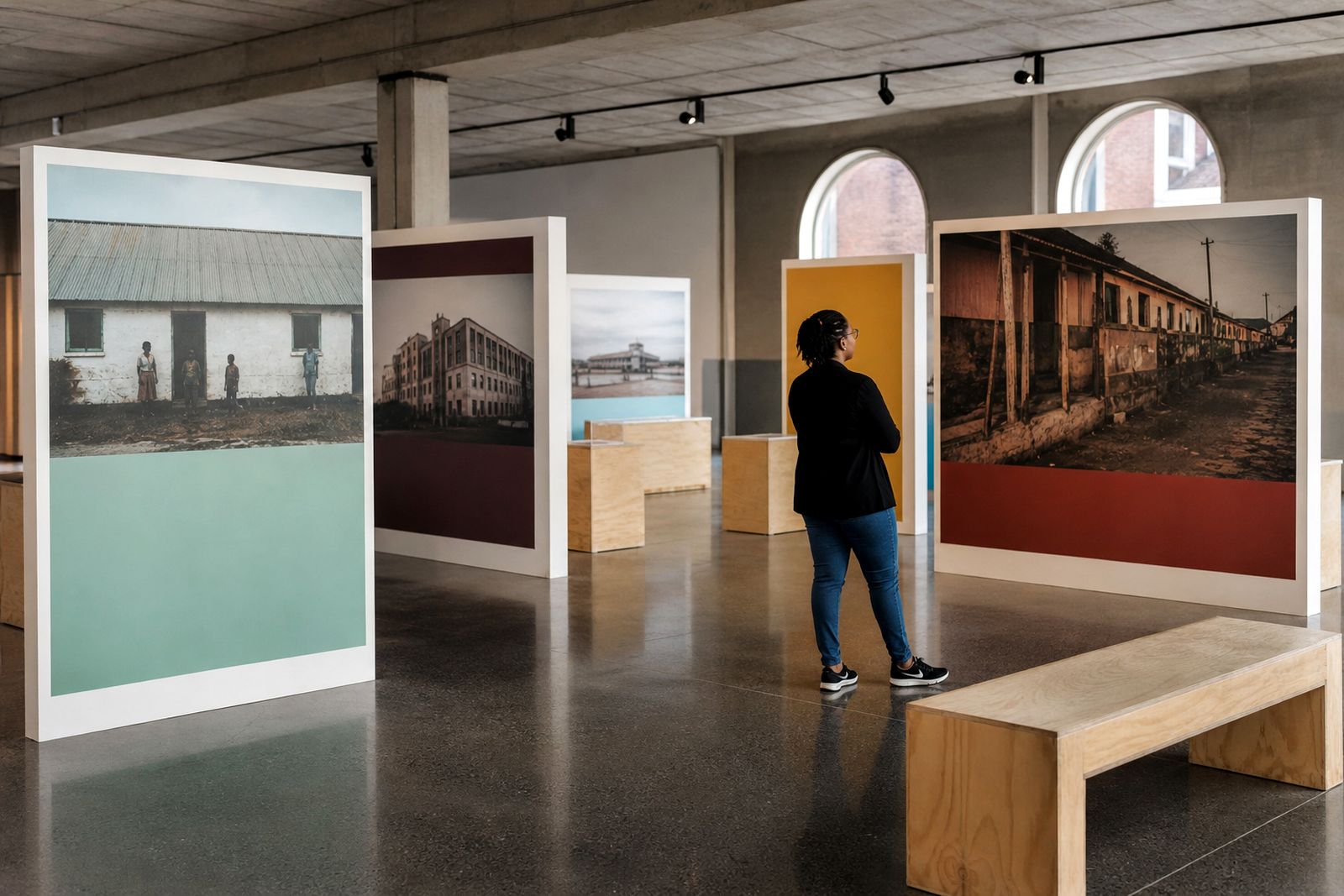
Different venues need different layouts. A mall usually needs a show that can hold attention in an open thoroughfare, while a library or museum often has quieter rooms where visitors spend longer with captions and image sequences. The content remains carefully curated in either case, but the way it sits on the floor changes a bit.
- Malls: Best for open, freestanding layouts with clear sightlines, wider walkways and quick visual impact.
- Libraries: Suited to slower viewing, reading time and more controlled movement between panels.
- Museums: Good for structured interpretation, existing visitor routes and closer integration with current displays.
If your venue has mixed needs, such as a civic building with a foyer and side rooms, we can help you choose a layout that keeps circulation safe while still giving the exhibition enough presence. A smaller footprint can still work well if the route is planned properly.
Choosing between malls, libraries and museums
When venue teams compare options, the best choice usually comes down to public flow, security, available floor area and how much ambient noise is normal in the space. A busy retail concourse needs a different approach from a reading room or a gallery floor.
- Choose a mall setup if you need strong visibility, flexible freestanding placement and a display that works in a shared public zone.
- Choose a library setup if your priority is educational engagement, easy reading access and calm visitor movement.
- Choose a museum setup if you want a more formal interpretive environment with a defined route and closer supervision.
For most venues, the first decision is not the subject matter but the floor conditions. Ceiling height, entry width, lift access, public trading hours and security routines all affect the final plan. Its often the practical details that decide whether a venue should host in an atrium, a hall or a side gallery.
Floor space, access and public circulation
A good exhibition layout must do two jobs at once. It must present the story clearly, and it must let people move comfortably without creating pinch points. This matters especially in malls where prams, cleaning trolleys and promotional stands already compete for space, and in libraries or museums where existing collections and reading areas must remain usable.
Before confirming a booking, venue teams should check the available floor area, door widths, loading access and the route from offloading point to exhibition zone. Freestanding panels and plinths avoid the need to fix into walls, which is useful where building rules limit drilling or surface changes.
- Keep clear walkways around the full display perimeter.
- Allow extra turning space near entrances and corners.
- Check whether offloading happens at basement, street or service-yard level.
- Confirm access hours if deliveries must avoid peak public times.
If your venue already manages temporary events, the same internal approvals usually apply here too. Security, operations and facilities teams should all sign off before transport is booked.
What our install includes
We crate, transport and install the exhibition using a two-day crew. That means the venue does not need to source separate installers, and there is a clear handover once the show is in place. The crew sets the panels and plinths, checks positioning on the floor and removes the packing materials at the end of the install.
This approach works well for travelling exhibitions because the parts are designed for repeat setup in different venues. It also helps when a site has strict housekeeping standards or limited back-of-house storage. When the install is complete, the area is left clean and ready for opening.
If your venue has service lifts, restricted loading times or weekend-only access, mention that in the enquiry form on our contact page so planning can start on the right footing.
How to choose your next page
Use the pages in this section according to the type of venue you manage. If you are responsible for a retail environment, go to the malls page for guidance on open public areas and shopper flow. If you run a library or museum, go to the libraries and museums page for a setup that suits quieter spaces and longer viewing times.
You can also move on to our pages about the two-day install, crating and transport, and panels and plinths if your team needs detail for operations approval. For exhibition content, browse African music, rail history and township architecture to match the show to your audience and available space.
When you are ready, send your venue details through the enquiry form on our contact page. Include your town, venue type and a brief note about floor area so we can point you to the most suitable option.
What our Exhibition customers say
Verified Google reviews
Questions we get asked
Do we need wall mounting or built-in showcases?
No. Our travelling shows are built around freestanding panels and display plinths, which helps venues host the exhibition without fixing into walls.
How long does installation take?
The exhibition is installed by a two-day crew. Timing on site still depends on access rules, offloading points and the route into the venue.
Can a mall, library or museum use the same exhibition content?
Yes. The subject can travel between venue types, but the layout and floor plan should be adjusted to suit public flow, quiet areas and available space.
Book a travelling exhibition
Send a note through our contact form with your venue, the floor space and the dates you have in mind, and our curator will contact you.
Open the contact form