

Crating and transport
Every travelling exhibition needs to arrive in good order, fit the venue, and unpack without fuss. Our crating and transport service is planned around South African roads, venue access rules and careful handling from Johannesburg to the final install point.
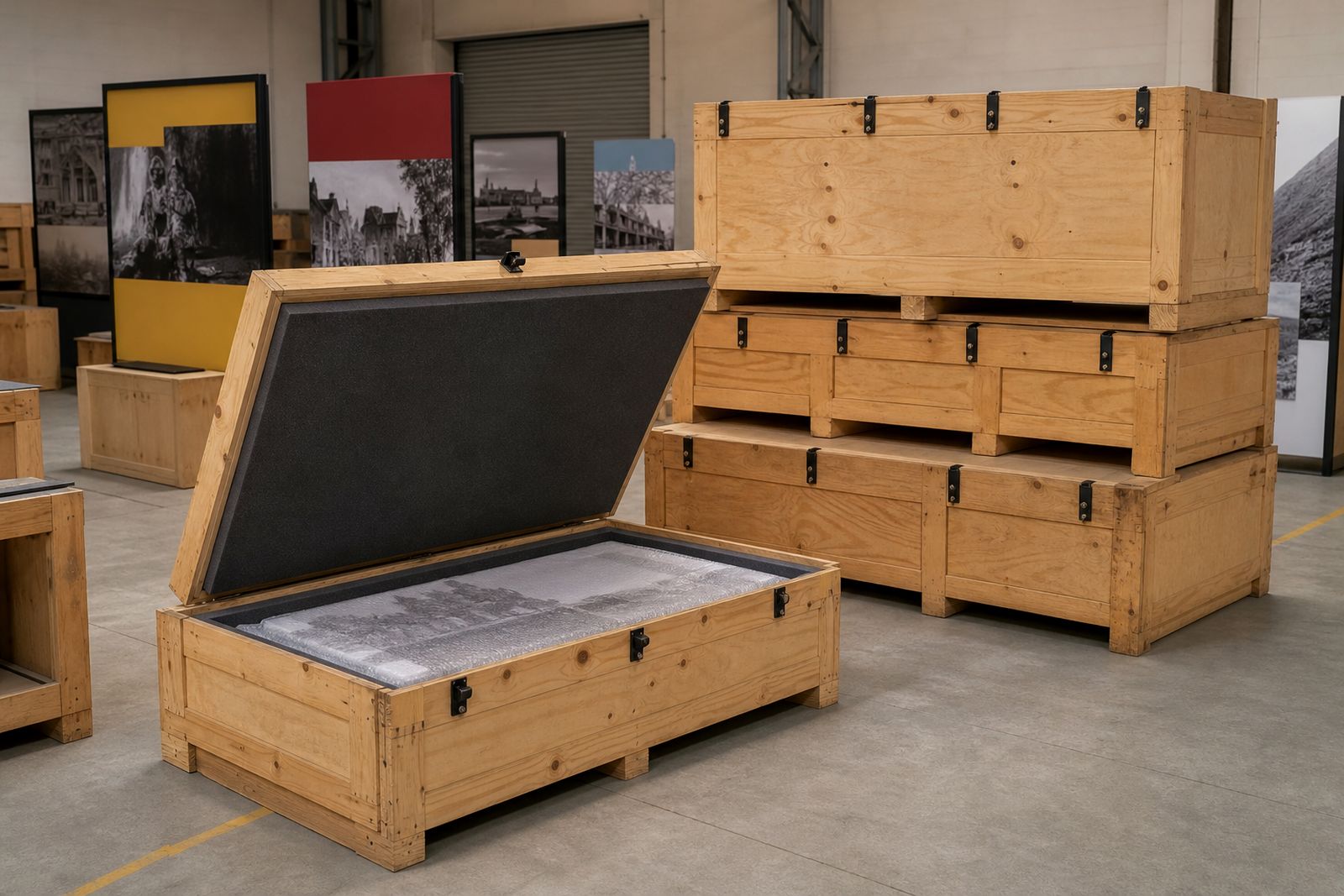
What is included in crating and transport
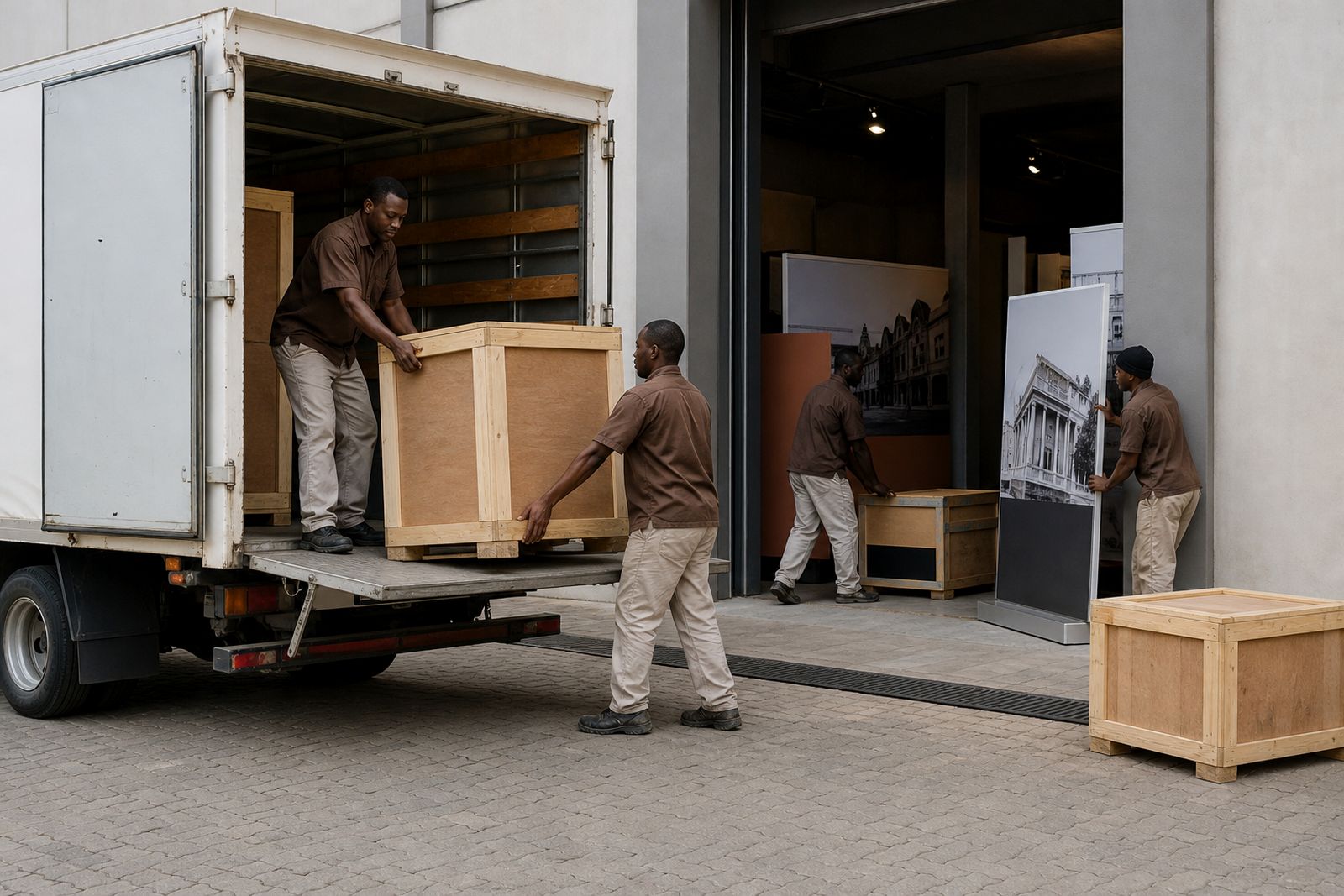
We prepare each show as a touring package rather than a once-off delivery. That means the panels, plinths, fixings, labels and handling notes are packed in a way that suits repeated loading, unloading and short-term storage between venues. Our team checks the full exhibition list before packing so the venue receives a complete show with the right components grouped together.
The service covers the practical parts that usually cause delays on arrival, including crate labelling, loading order, venue access planning and coordination with the install crew. For malls, libraries and museums this is especially useful where loading bays are shared, floor finishes must be protected or unloading windows are restricted.
- Custom timber crate layouts for panels, plinths and loose components
- Protective wrapping for printed surfaces and edges
- Numbered packing lists for faster check-in on site
- Loading plans based on venue access points and lift size
- Transport from Johannesburg to the venue and return movement after de-install
- Condition checks before dispatch and again on arrival
How each show is packed
Our exhibitions are built to travel, so the packing method is matched to freestanding display equipment rather than general freight. Panels are stacked with separators to prevent rubbing at the face and corners. Plinths are wrapped individually and packed so that lids, bases and tops cannot shift in transit. Small items such as brackets, levelling feet and gloves are packed in labelled accessory boxes.
We keep the crate contents logical for the install sequence. The first items needed on site are packed for first access, which helps when a venue allows only a short unloading slot. This saves time at the loading bay and limits unnecessary handling in public areas. Where a route includes long-distance road travel, coastal humidity or overnight holding, we add extra internal protection and moisture control where needed.
- Freestanding panels packed upright with protective spacers
- Display plinths packed by size and finish to avoid scuffing
- Accessory kits packed separately and marked per exhibition zone
- Crates marked with weight, orientation and handling notes
- Reusable packing materials set aside for the return trip
The transport process step by step
Transport starts with a confirmed venue brief. We check delivery dates, truck access, lift dimensions, stair restrictions and any mall or municipal unloading rules that apply to the site. From there we finalise the packing list and crate sequence, then the exhibition is loaded in the order required for efficient offloading.
On dispatch day the driver carries the movement paperwork and the install team has the crate map. At the venue we offload to the agreed marshalling point, inspect for any transit movement, and move the packed items to the display area in a controlled sequence. If a venue has narrow passages, polished floors or strict public trading hours, we plan around that before the truck leaves Johannesburg.
After the exhibition run, the same method is used in reverse. Items are checked off, repacked into the original crate positions and moved out without leaving packing waste behind. It sounds simple but the order matters a lot.
- Venue access check and delivery window confirmation
- Packing list sign-off and crate numbering
- Truck loading to suit the install order
- Arrival inspection and controlled offload
- Repack after de-install using the same inventory list
- Return transport or transfer to the next venue
What the venue must prepare
Clients do not need to arrange specialist exhibition handling, but the venue does need to prepare the basics so delivery can run on time. The most important points are access, floor space and a clear contact person on the day. If a shopping centre has tenant delivery hours, or a library uses a side service entrance, we need that confirmed in advance.
Please make sure the route from truck to exhibition area is measured and free of obstructions. This includes ramps, lifts, passage widths and any security checkpoints. Where power cuts affect lift access or basement parking, we plan an alternative route with the venue beforehand.
- A confirmed delivery and collection window
- Loading bay or legal stopping area for the truck
- Lift sizes, stair details and route measurements
- Protection requirements for floors or walls if the venue has them
- A staff contact who can authorise access on arrival
- A clean, cleared exhibition footprint ready for install
How pricing is worked out
Crating and transport pricing is based on the real movement requirements of the show rather than a flat rate. The main factors are the exhibition size, number of crates, total volume, travel distance from Johannesburg, access complexity and whether the route is a single venue run or part of a tour. A ground-floor library with easy parking is different from a mall with overnight delivery rules and a freight lift booking.
We also consider whether the job needs holding time, return storage between venues or split deliveries. If a venue requires extra waiting time for access, or if the truck cannot park close to the unloading point, that affects labour and handling time. We explain these items in general terms during the enquiry stage so clients know what is driving the cost without any guesswork.
Where a show moves on to a second venue, the transport plan can often be arranged more efficiently than sending everything back first, depending on timing and storage needs.
Aftercare, checks and touring readiness
Once the exhibition is installed, we keep the crate record and packing list on file for the next move. That makes follow-on touring simpler and helps the next venue receive the same layout of components. If an item shows wear after transport or handling, we flag it during the post-install check and deal with it before the next leg where possible.
After de-install we inspect the panels, plinths and accessories as they go back into the crates. Missing or damaged parts are recorded against the inventory list so there is a clear handover for the next booking. This is especially important for shows moving through several towns, because small losses at one venue can slow down the next one.
Our aim is straightforward: each show must travel well, unpack cleanly and be ready for the next venue without last-minute surprises.
What our Exhibition customers say
Verified Google reviews
Questions we get asked
Can you move an exhibition directly from one venue to the next?
Yes. If dates, access times and storage needs line up, we can plan a direct transfer rather than routing everything back first.
Do venues need special equipment to unload the crates?
Usually not. We plan the crate sizes and handling method around normal venue access, though lift size and route width must be confirmed in advance.
What happens if a crate arrives after bad weather or a long road trip?
We check the condition on arrival before unpacking. If extra cleaning or minor surface attention is needed, the install crew handles that as part of the site process.
Also worth a look
Book a travelling exhibition
Send a note through our contact form with your venue, the floor space and the dates you have in mind, and our curator will contact you.
Open the contact form